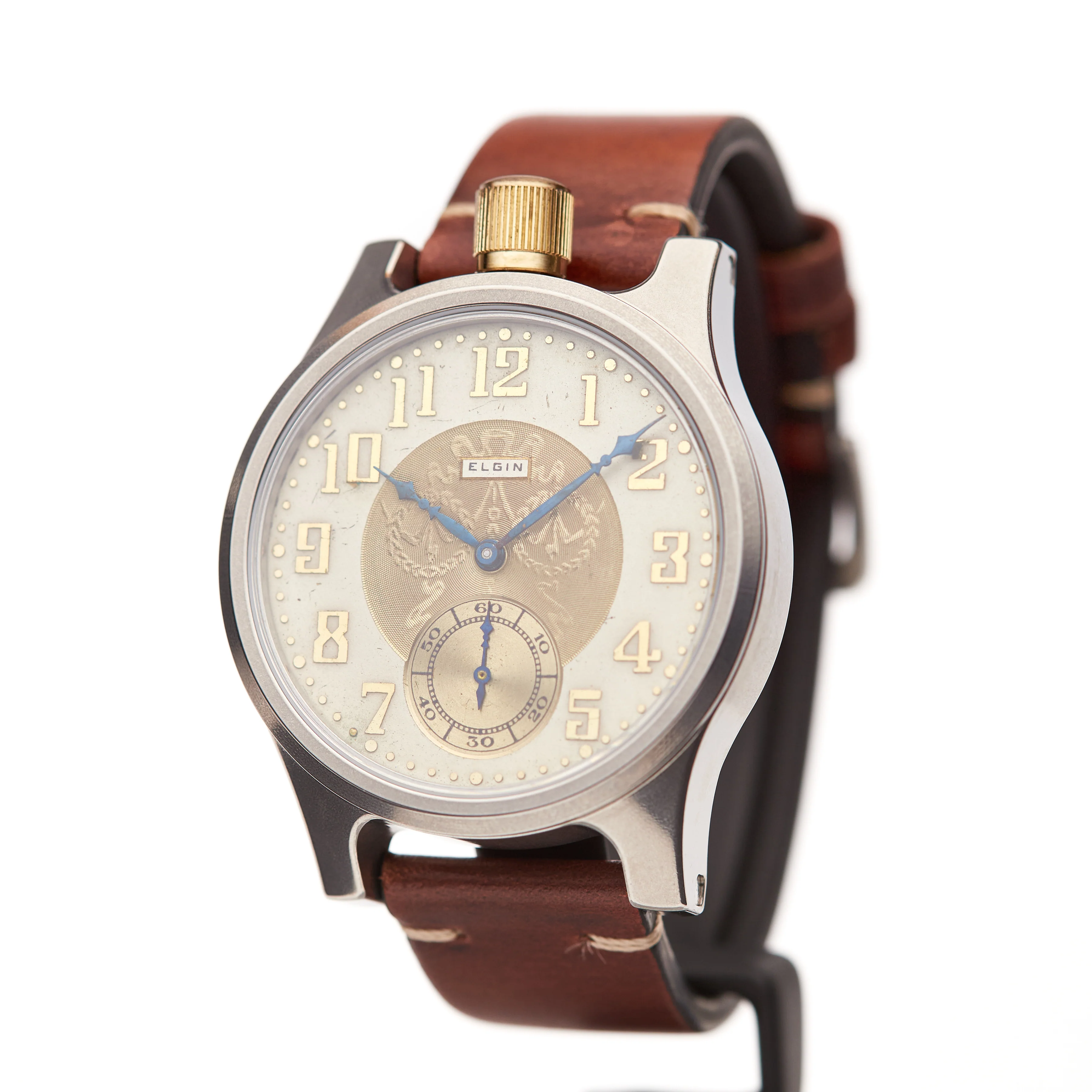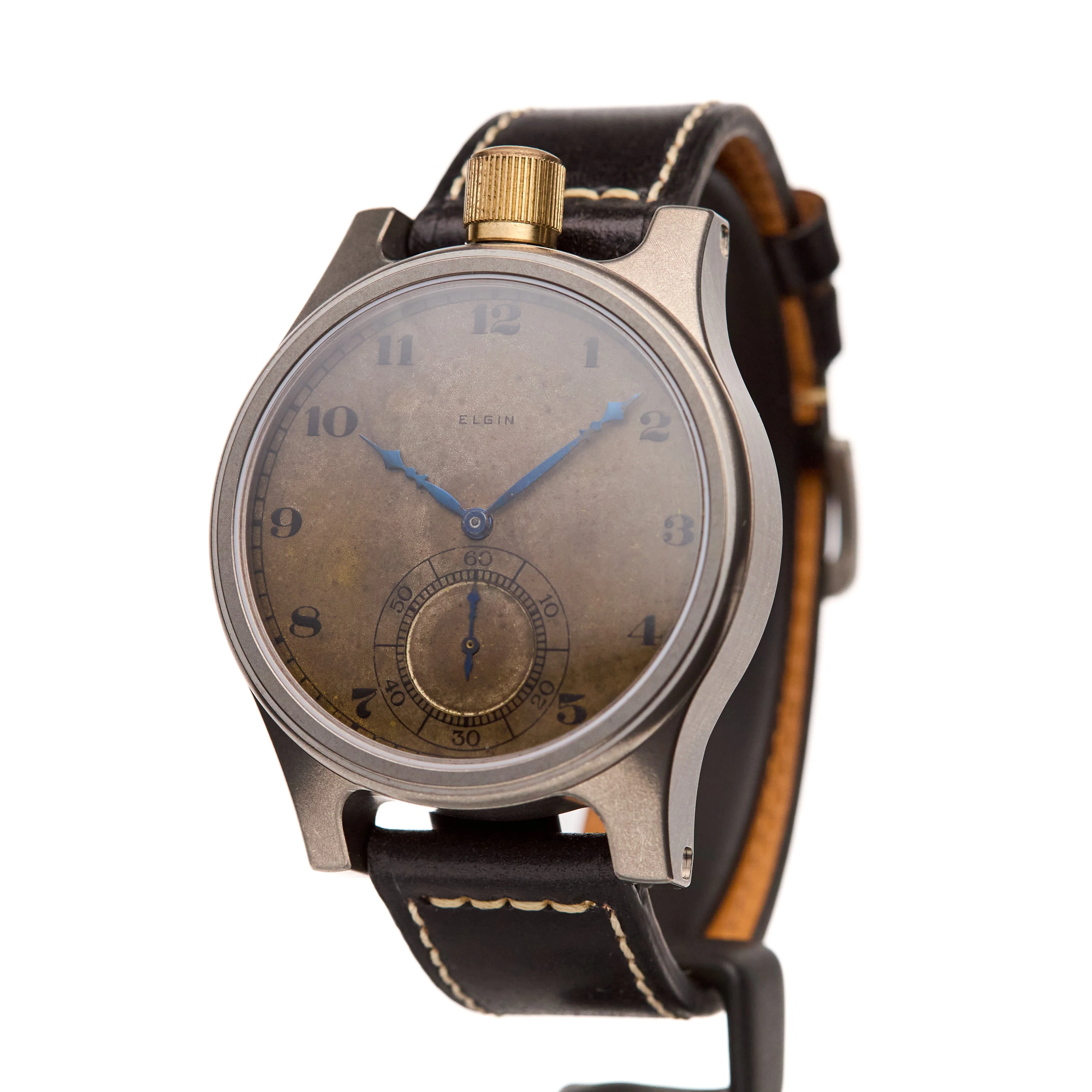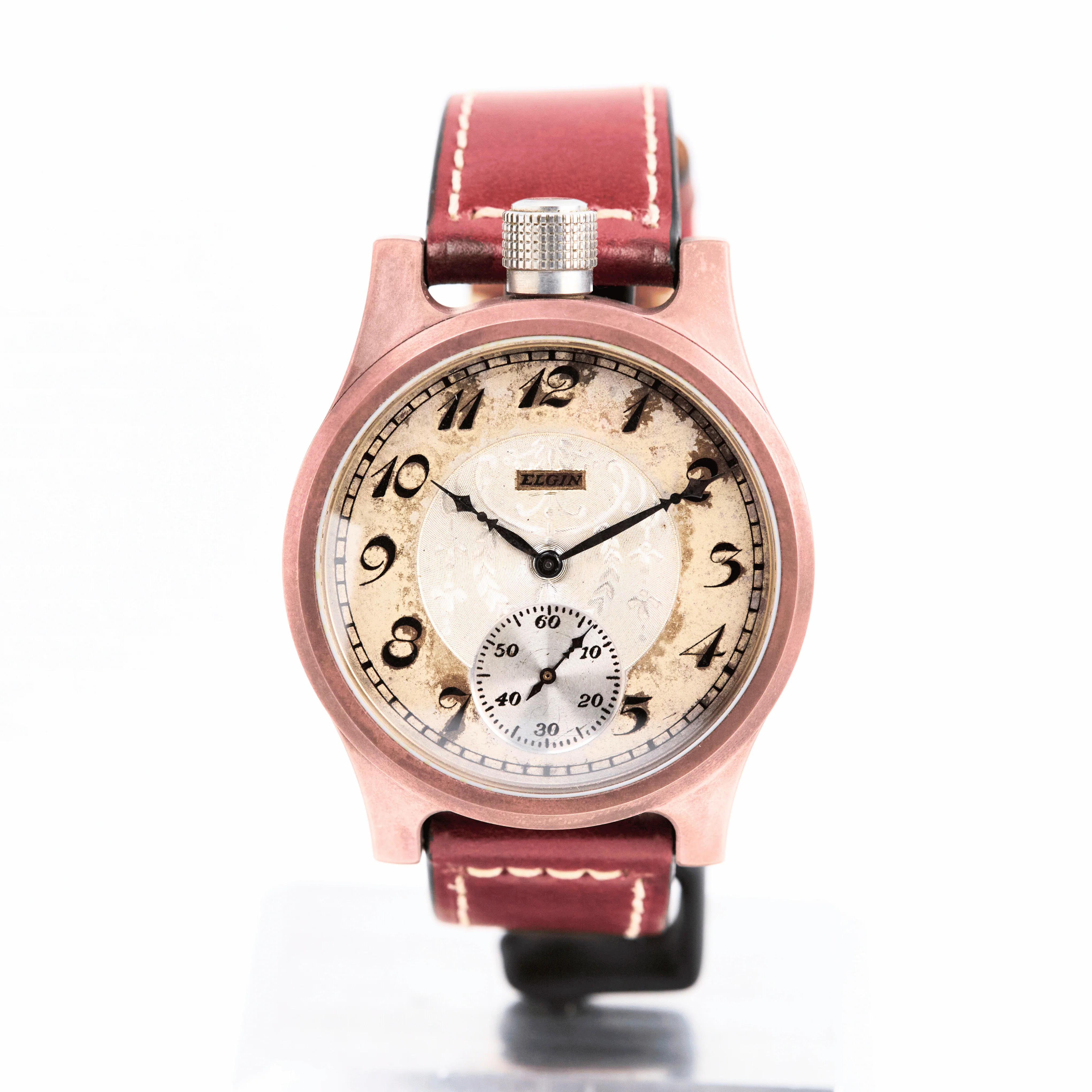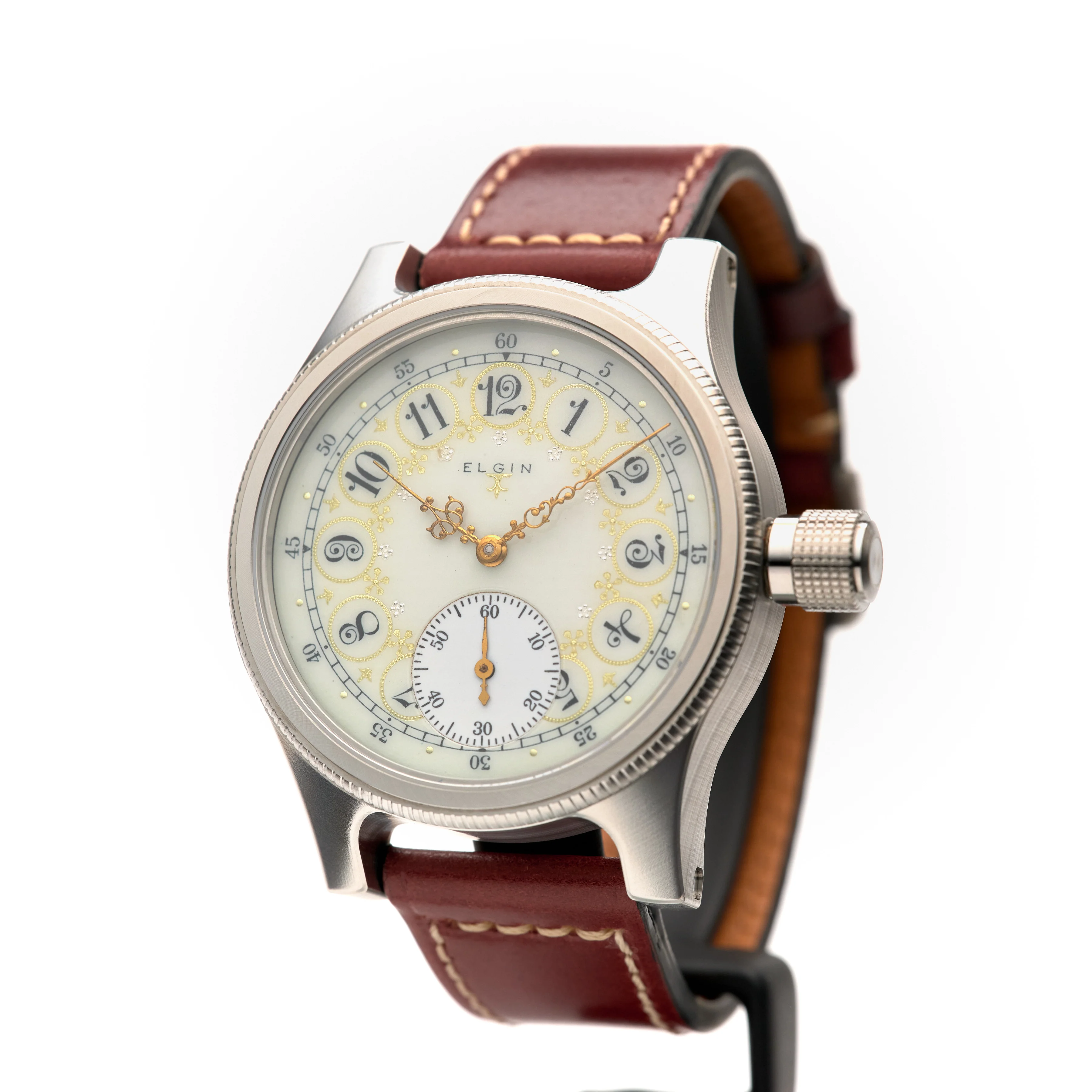
The Chicago 094 (45mm)
Premium
Price TierVisit the brand's site for current pricing
What makes The Chicago 094 unique: The Chicago 094 brings ornate charm and technical precision together in a design that feels both fantastical and refined. Its cream-toned dial is adorned with whimsical golden flourishes—miniature filigree accents that dance around each numeral in delicate symmetry. Look closer, and youll notice the dials unusual blend of textures: a railroad-style minute track marked with gold dots around the perimeter and a recessed sub-seconds dial at 6 oclock with bold, printed numerals for crisp legibility. At the center, a pair of finely rendered Louis XIV hands —with their signature curls and ornamental flair—add a theatrical quality thats rare even among antique designs. Inside this timepiece beats a 17-jewel Elgin movement , manufactured in 1917. This is a hunting-style movement, originally designed for pocket watches with side-positioned crowns, now repurposed into a wristwatch that honors its past while embracing a modern form. Flip it over, and youll find a beautifully preserved mechanical landscape: hand-finished bridgework featuring floral engravings , notably around one of the upper screws, and a layered depth enhanced by polished gears and jewel settings. This particular movement also features a double roller —a significant upgrade at the time—designed to protect the escapement from shock and improve long-term accuracy and durability. Weve housed this movement in a machined stainless steel case with a coin-edge bezel , paired with a knurled machined-steel crown that provides excellent grip and visual balance. The oxblood leather strap adds warmth and contrast, its rich tone echoing the dials golden embellishments. Altogether, the piece feels as if it belongs in a curated cabinet of wonders—functional history dressed in elegance. In 1917, the same year this movement was produced, Americas entry into World War I reshaped the nation's industrial landscape. Watch companies like Elgin ramped up precision manufacturing to support the war effort, laying the groundwork for a golden age of American watchmaking—one where engineering, artistry, and national pride all ticked in sync.