The Lancaster 114 (45mm)
Est. $5,900 USD
Pricing may vary — visit the brand's site for accurate pricing
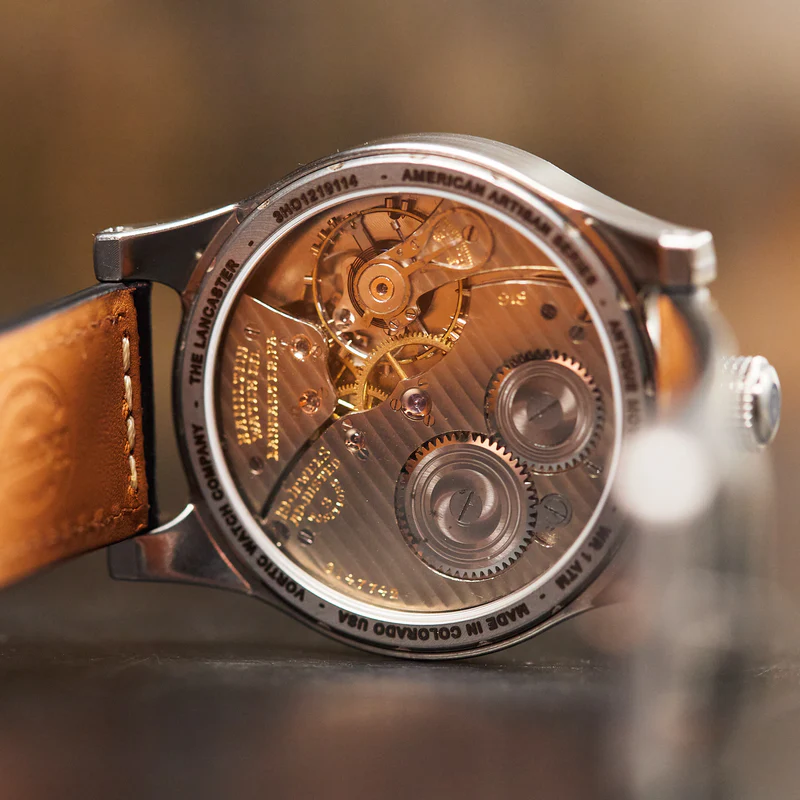
What makes the Lancaster 114 unique: The Lancaster 114 is all about character. Its cream dial carries a vertical pinstripe texture that catches the light like brushed silk, with areas of warm, smoky patina that remind you this piece has already lived a long life. Applied gold-tone Arabic numeralstall, slightly dramatic, and gothic in feelrise out of that texture and are framed by a ring of circular minute markers around the edge of the dial. At center, we kept the original gold gothic-style open kite hands, which add a touch of elegance and make the time easy to read at a glance. Down at 6 o™clock, an unusual fan-shaped œSecometer replaces the traditional sub-seconds dial, with a decorative flourish above the scale that gives this watch a distinctly Art Deco personality. Inside, this watch is powered by a 19-jewel Hamilton movement manufactured in Lancaster, Pennsylvania in 1934. Hamilton built these movements for accuracy and durability, and you can see that intent through the open caseback. Broad bridges are decorated with crisp pinstripe Geneva stripes that echo the dial's vertical texture, while polished screws and bright gold-plated gears provide plenty of visual depth. It's a beautifully preserved example of American watchmaking in the interwar years, brought back to life to be worn every day instead of stored in a drawer. We machined a stainless-steel case specifically for this movement and paired it with a smooth stonewashed titanium bezel that softens the light and frames the dial's aged cream tones. An oversized knurled stonewashed-steel crown at 12 o™clock nods to the pocket-watch origins of the movement and makes winding satisfying and tactile. To finish the build, we chose a black American-made leather strap with bold contrast stitching, which grounds the watch visually and balances the warmth of the dial and numerals with a clean, modern presence on the wrist. When this Hamilton movement left the factory in 1934, American railroads were racing to modernize. That same year, the Chicago, Burlington & Quincy Railroad introduced the stainless-steel Pioneer Zephyr streamliner, a diesel-powered train that made a highly publicized run from Denver to Chicago in just over 13 hours and set new expectations for speed and efficiency in passenger travel. By preserving and converting this 1934 movement today, we're carrying forward a small piece of the same era of innovation that reshaped how Americans moved across the country.