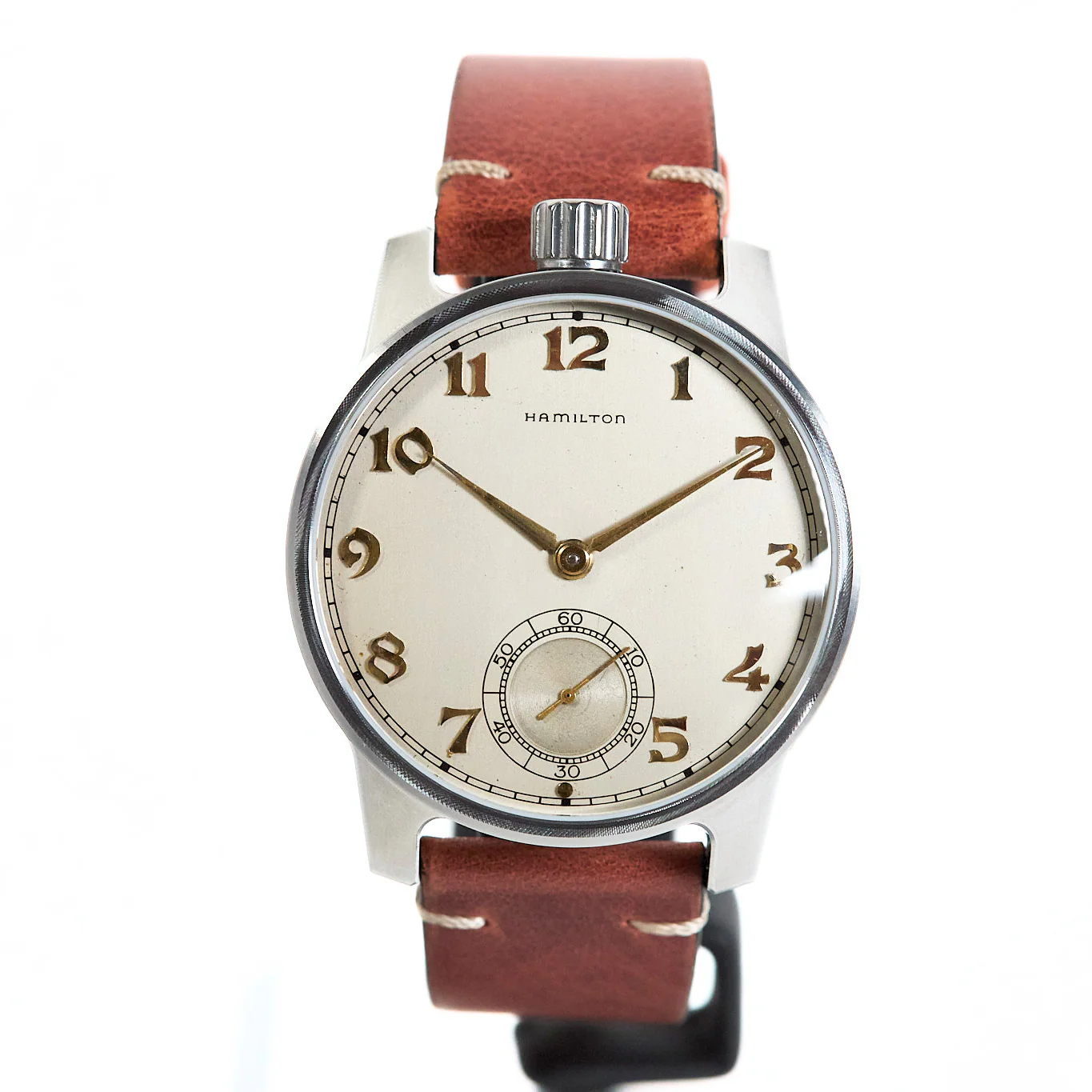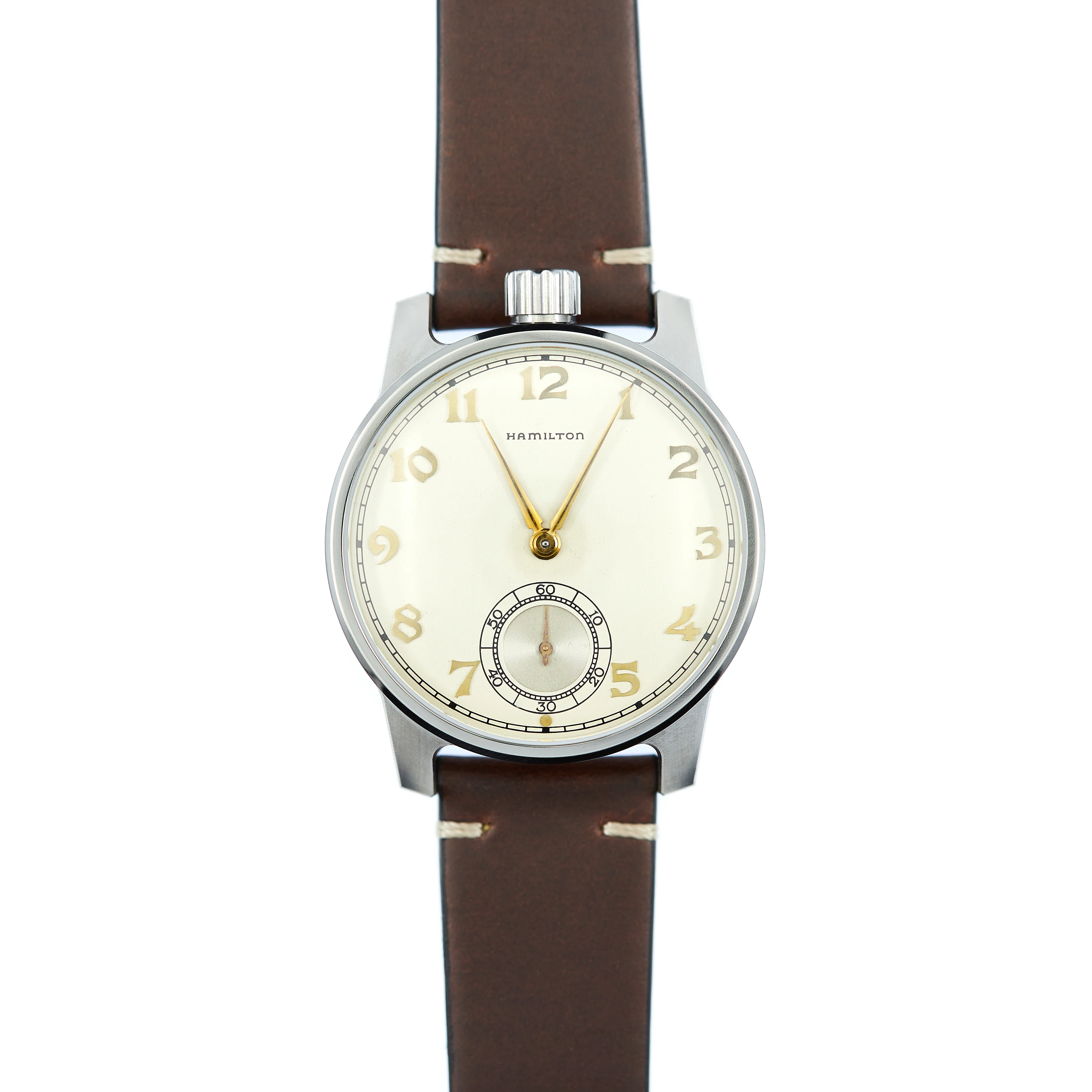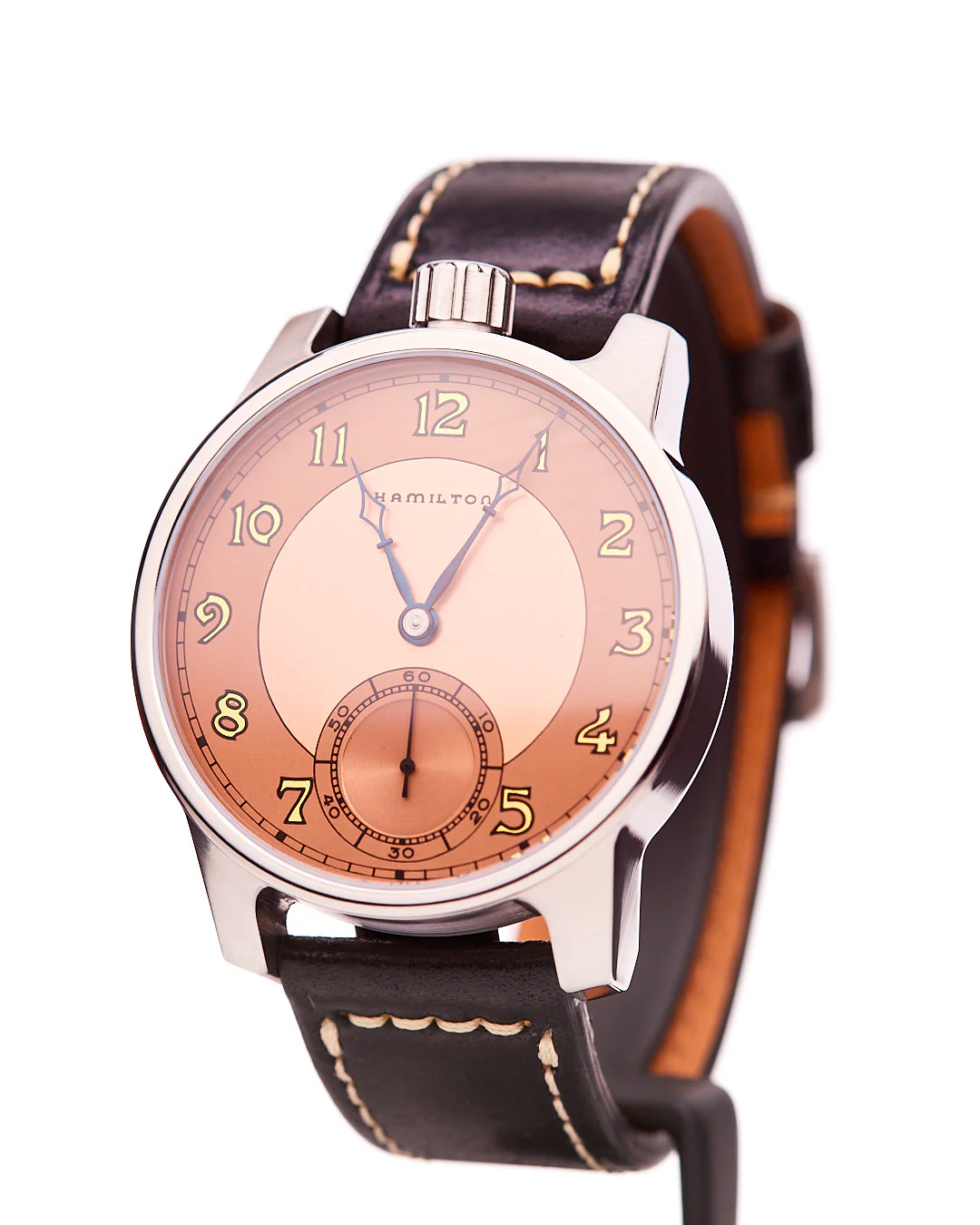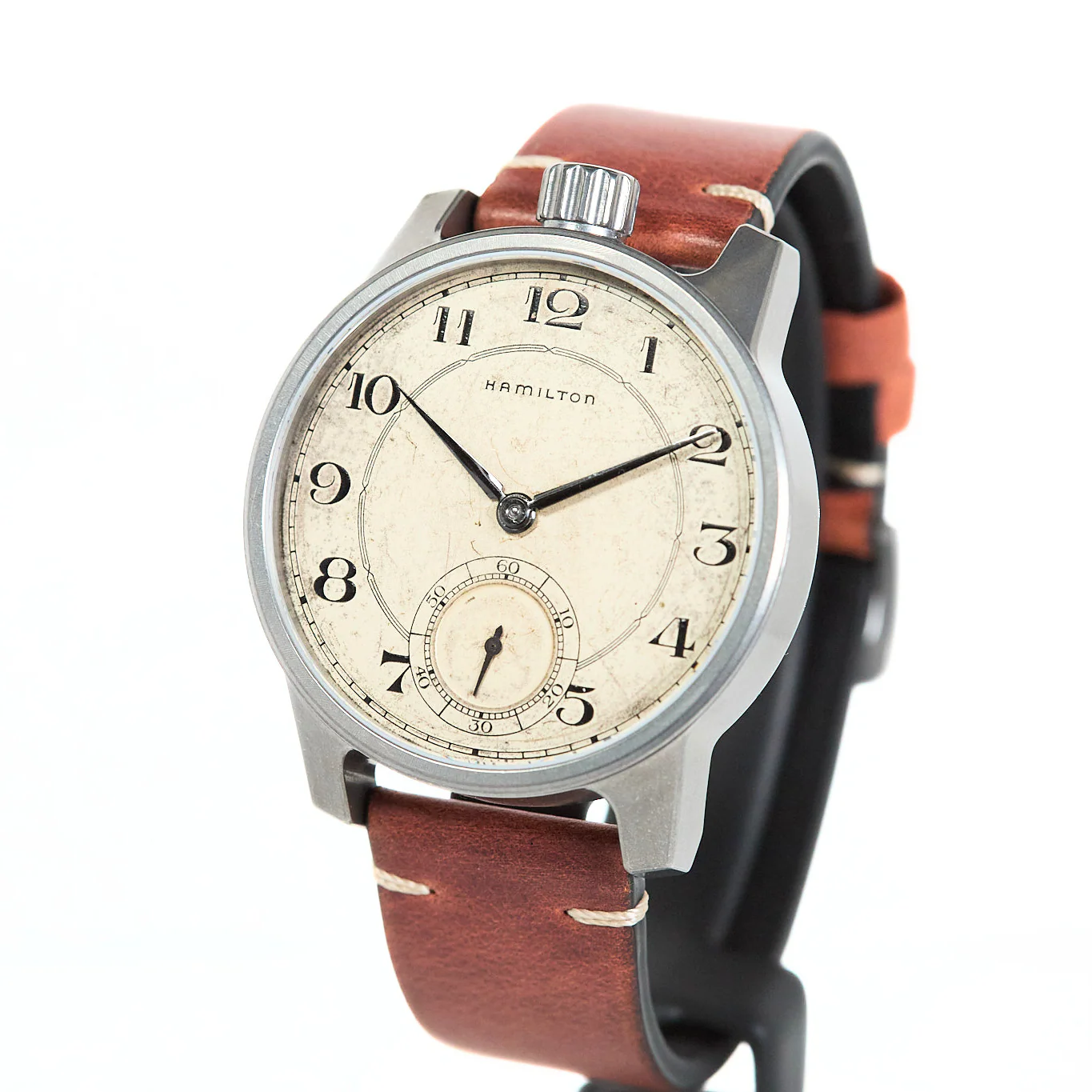
The Lancaster 136 (43mm)
Premium
Price TierVisit the brand's site for current pricing
What Makes The Lancaster 136 Unique: The Lancaster 136 represents the refined confidence of postwar American watchmaking. Built around a 17-jewel Hamilton movement manufactured in 1946, this watch comes from a period when Hamilton had firmly established itself as one of the countrys premier manufacturers of precision timepieces. By the mid-1940s, the companys movements reflected decades of incremental refinement, combining dependable performance with understated elegance that continues to resonate with collectors today. The dial immediately conveys that philosophy. Rather than relying on dramatic patina or ornate decoration, it displays a soft cream finish that has naturally mellowed over nearly eighty years. Gentle aging spreads evenly across the surface, lending warmth and authenticity without compromising legibility. Collectors often appreciate dials like this because they exhibit honest character while remaining remarkably balanced and uncluttered. One of the most distinctive elements is the typography. The bold applied Arabic numerals feature a classic Art Deco influence, with crisp edges and subtle dimensionality that catch the light differently than printed numerals. Paired with slender blued-steel hands, the dial achieves an elegant contrast that feels equally appropriate today as it did when the movement first left Hamiltons factory. The subsidiary seconds register at six oclock anchors the composition while preserving the proportions originally intended for this 10-size movement. A finely printed double-track chapter ring surrounds the dial, providing additional visual structure without distracting from its restrained design. Turning the watch over reveals why Hamiltons 917 movements continue to enjoy such a strong reputation among collectors. The movement features broad Geneva striping across its bridges, polished winding wheels, gold jewel settings surrounding ruby jewels, and Hamiltons signature spiral-pattern ratchet wheel. Each finish serves both an aesthetic and functional purpose, reflecting the companys commitment to producing movements that were as attractive as they were dependable. This particular movement is adjusted to three positions, a designation that speaks to Hamiltons emphasis on precision. Position adjustment required additional time and skill during regulation, ensuring more consistent timekeeping as the watch changed orientation throughout daily wear. It remains one of the characteristics collectors look for when eva