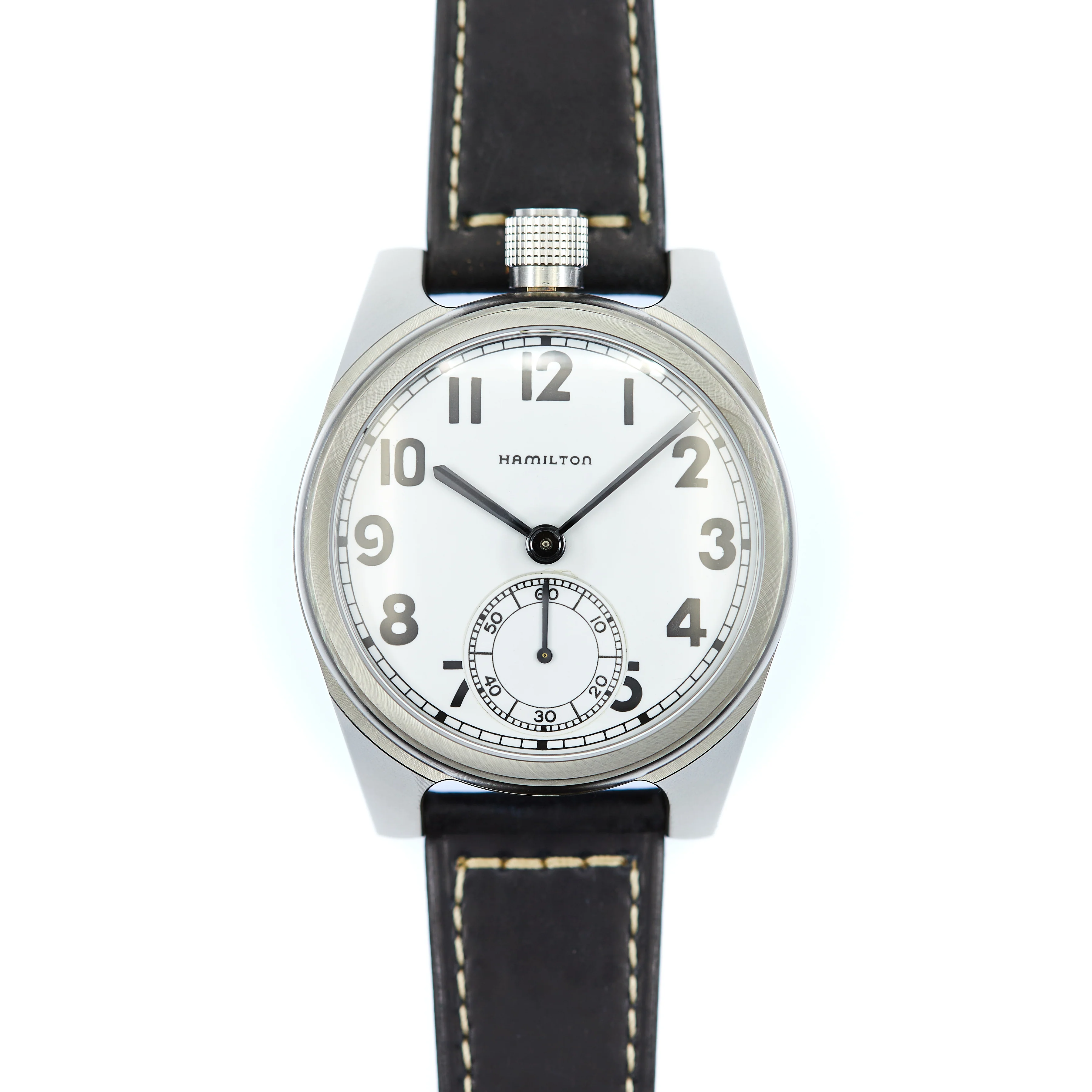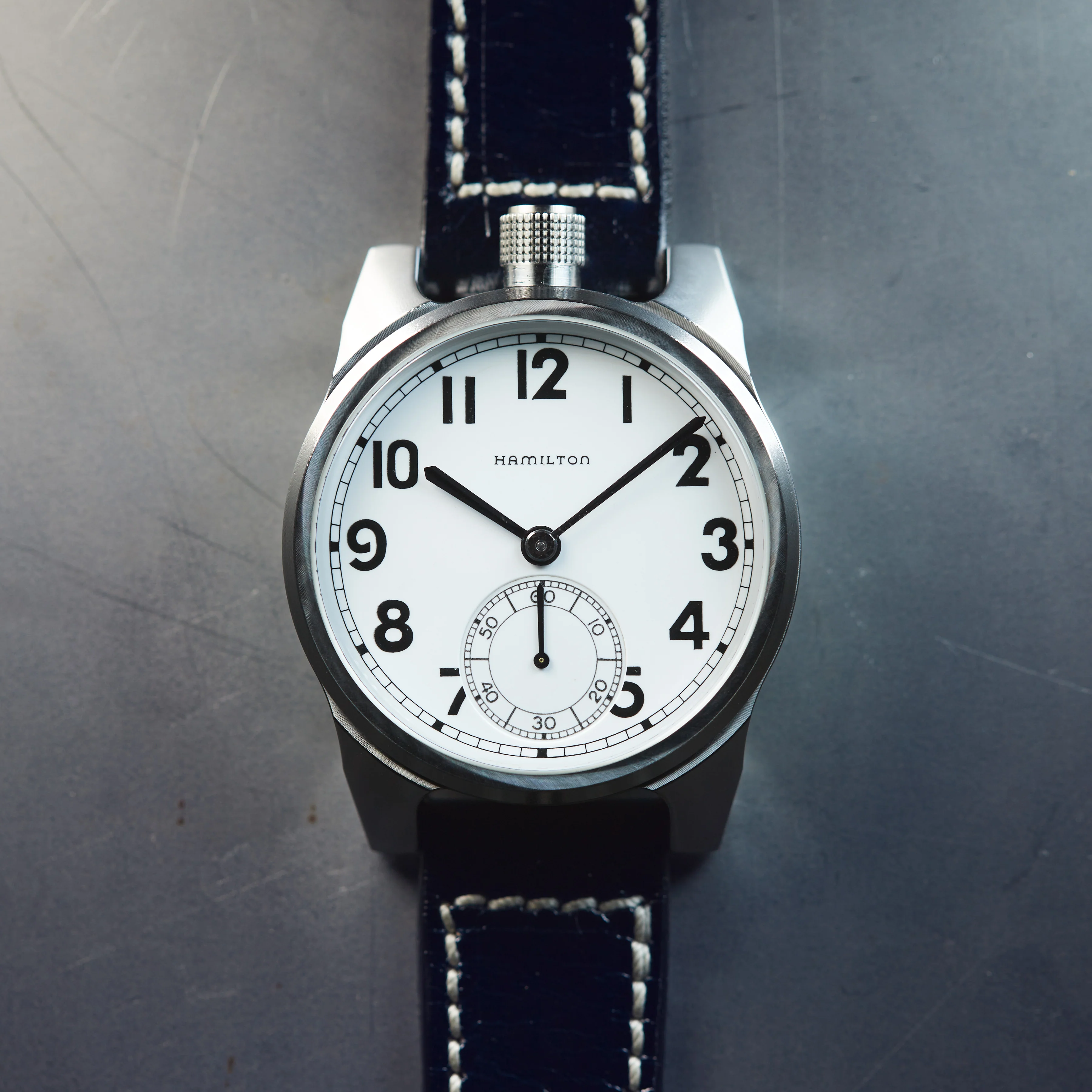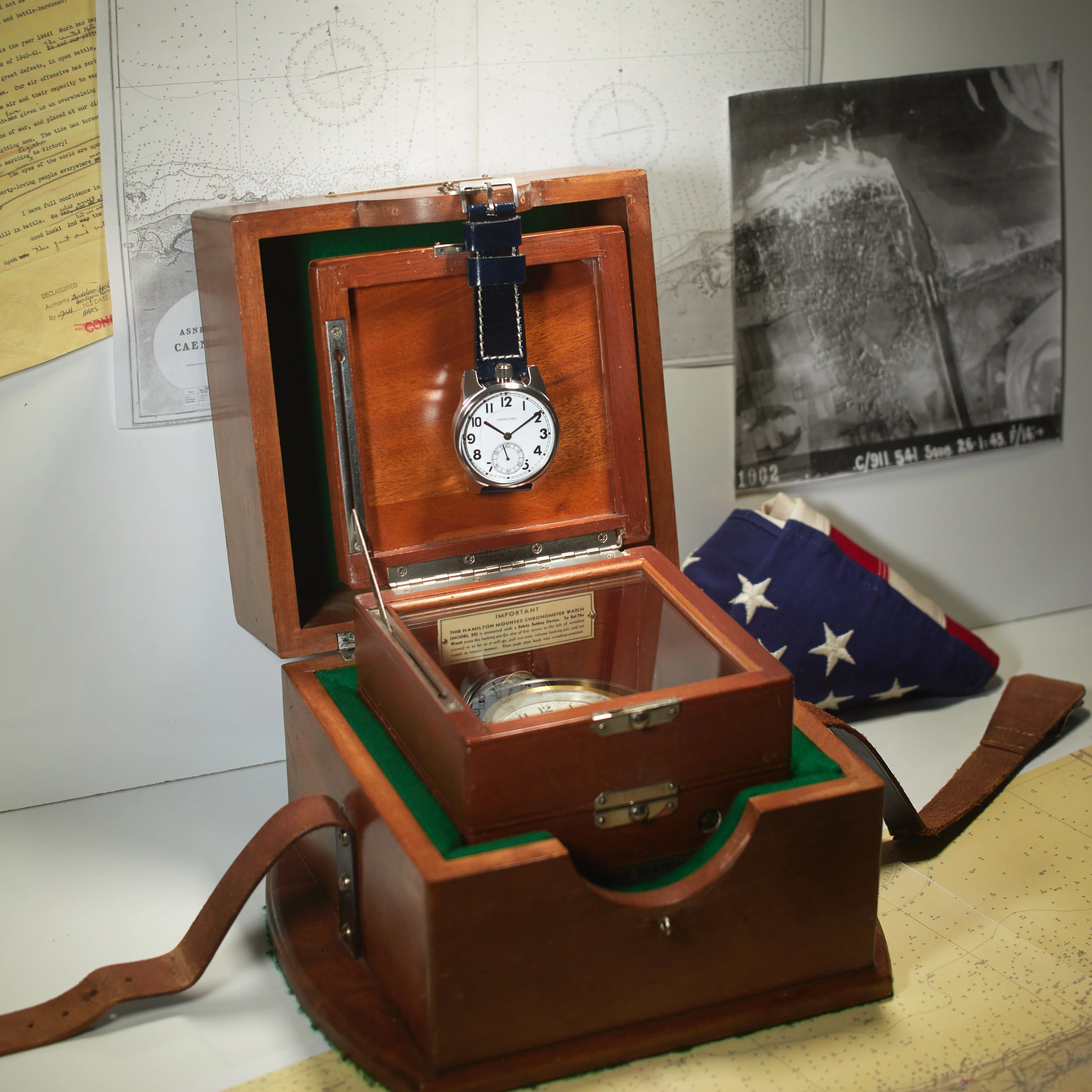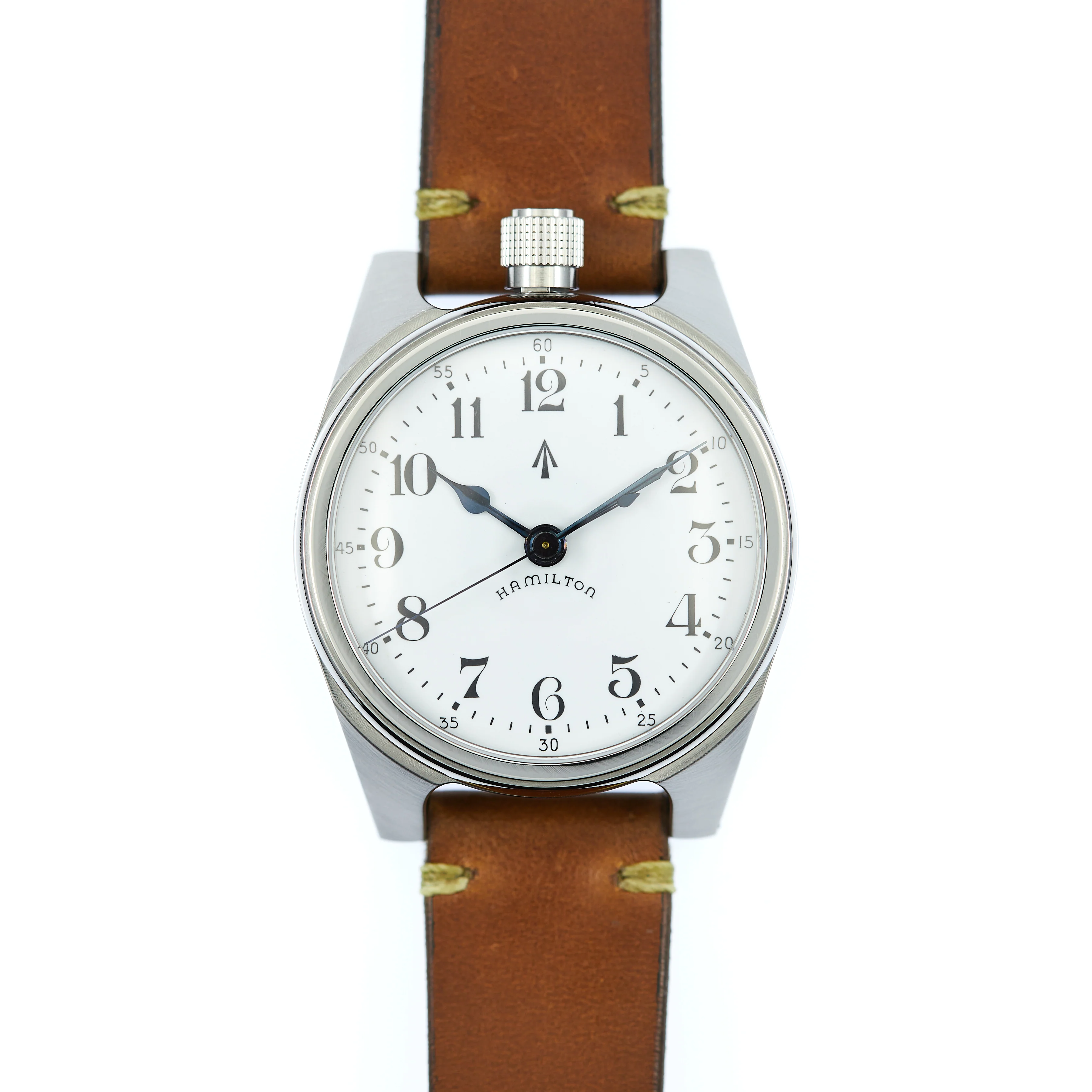
The Royal Pheon Watch
Premium
Price TierVisit the brand's site for current pricing
You've likely seen our Military Edition , so you have doubtlessly seen the Hamilton 4992B movement with 24-hour dial. Over 100,000 of those "Master Navigator" pocket watches were made during World War II. The 4992B was incredibly accurate and tough, which made it highly desirable for the United States military. Unbeknownst to many, Hamilton made a much more rare pocket watch in a 12-hour variety. That pocket watch, the Hamilton 3992B, was primarily exported abroad. The 3992B and 4992B mechanics are nearly identical but the 3992B has a more simple, clean, 12-hour dial. As is the case for Hamiltons other military pocket watches, the watches had a built-in boost in their longevity because any parts needed to repair them were identical to those of the 4992B and thus were widely available. Most sources agree that Hamilton produced 2,312 of the 3992B models for export, with 312 going to Canada and 2,000 going to England. Both are rare finds today due to such a small number being made in such a dangerous and destructive war. It is widely accepted that the watches exported to England were used partially for the Royal Navy and partially for the Royal Air Force. England ordered the watches due to their inability to order accurate watches from Switzerland due to the conflict throughout Europe. The 2,000 sent to England are highly desirable to collectors because they include the British Broad Arrow on the dial. The Broad Arrow, also known as the crows foot or pheon, is one of history's most widely recognized markings. A simple symbol consisting of three lines that converge downward from one point, some consider it to be the earliest use of a trademark in modern history. It is believed that America first formally recognized this symbol in 1691, as it was added to the Massachusetts Bay Charter. Men working for the King of England used a hatchet to carve the marking on Eastern White Pine trees they were planning to harvest for the kings royal use up until 1776. The marking would resurface in American history more than a century later when some local watchmaking companies included it on pocket watches for the British military. Hamilton's 3992B models are likely the most well-known examples of those today. If you look closely, you can see that this watch was marked with the Broad Arrow on the dial AND the movement, which is extraordinarily rare. We do not know how many of the 2,000 were marked like this, but we have 10, and they are the only 10 we've ever seen. Also, no