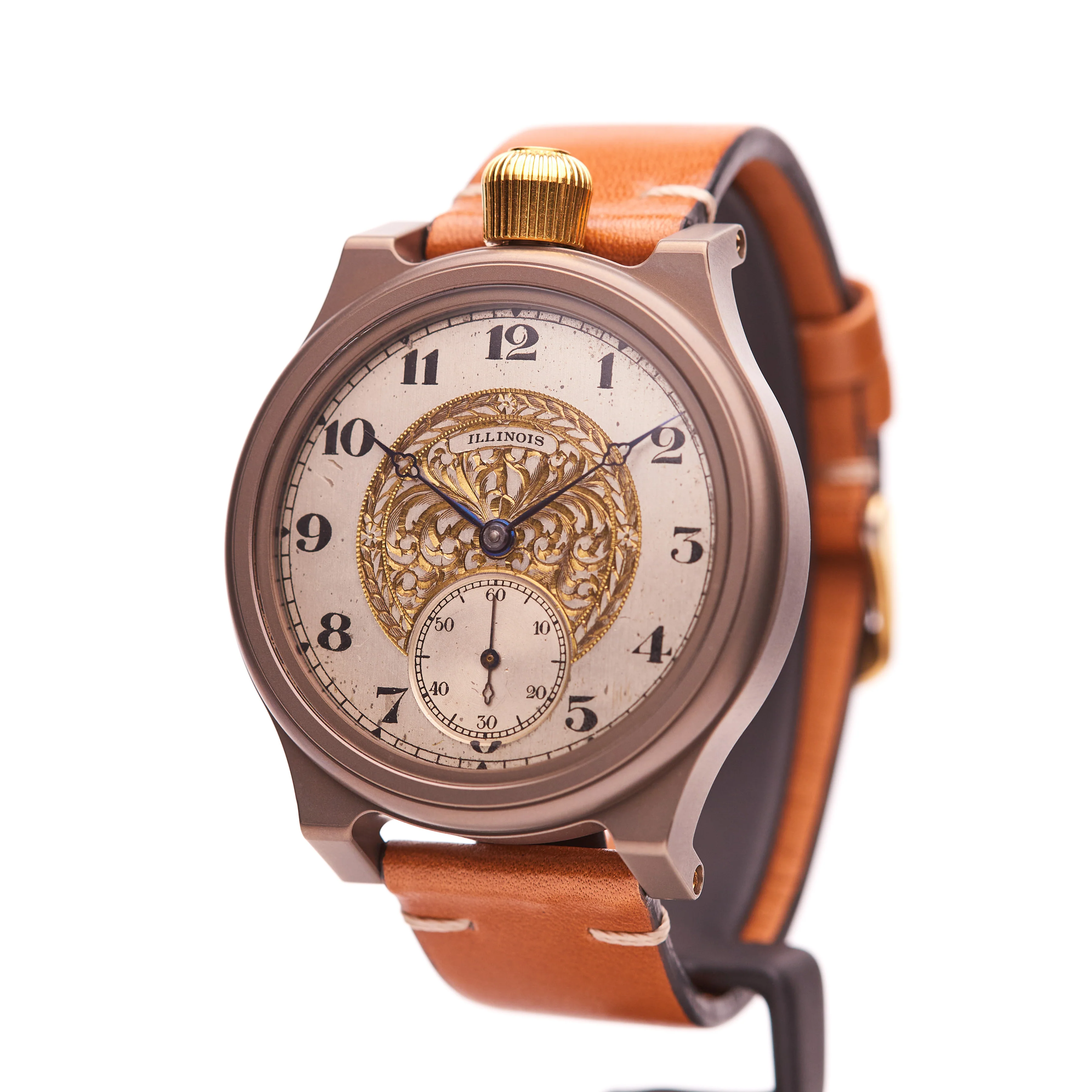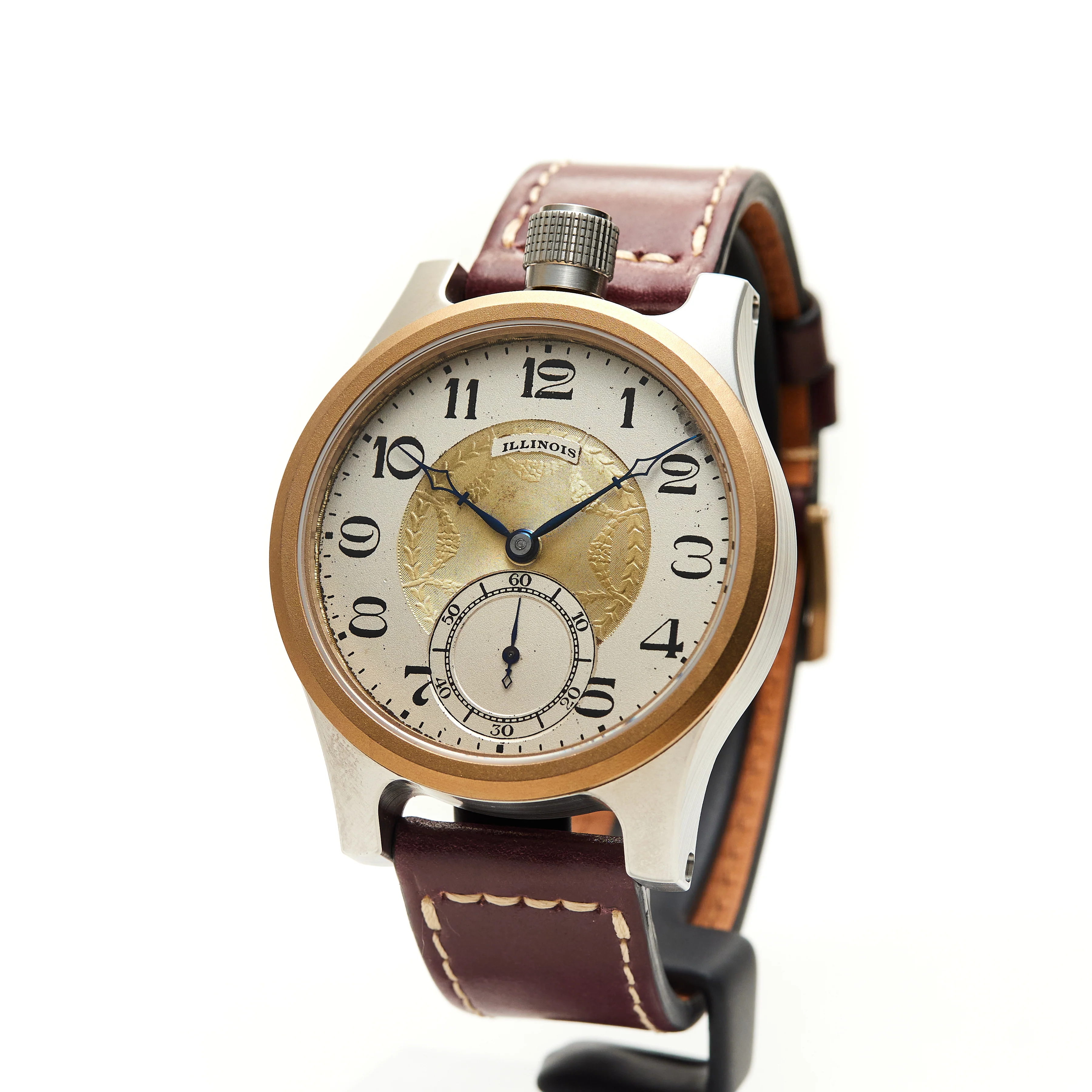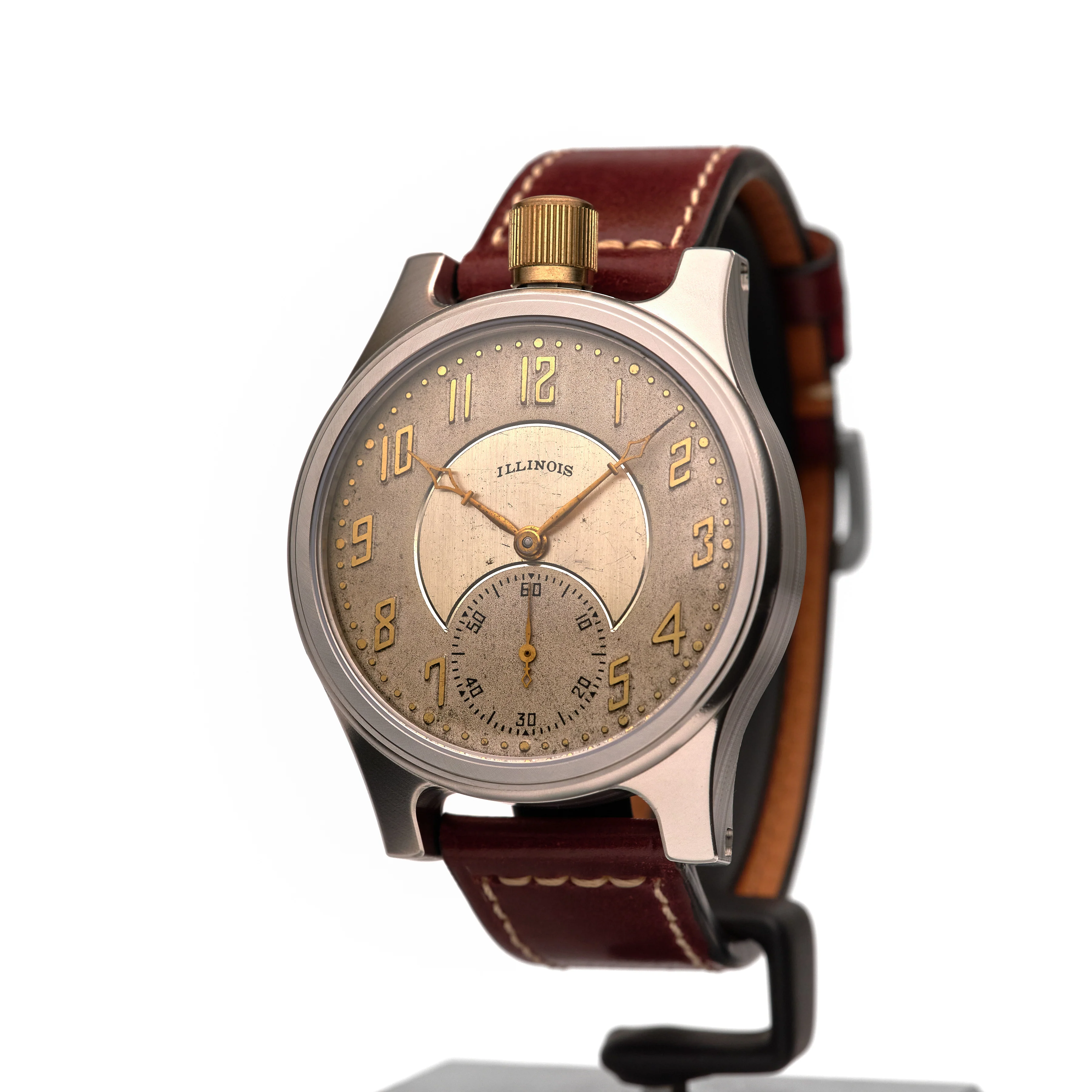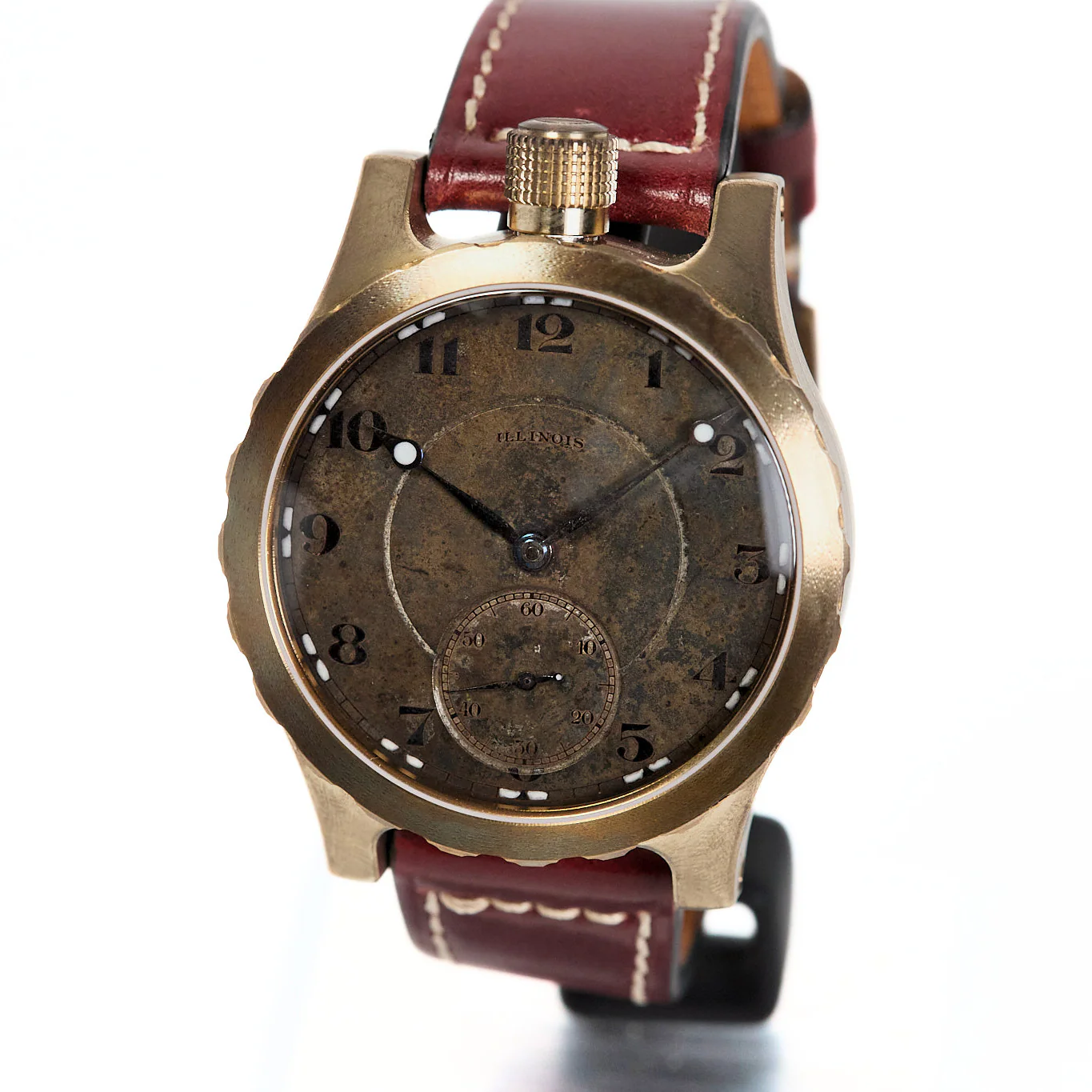
The Springfield 176 (45mm)
Premium
Price TierVisit the brand's site for current pricing
What Makes The Springfield 176 Unique: The Springfield 176 is a watch that embraces age, character, and craftsmanship in equal measure. Built around a 17-jewel Illinois movement manufactured in 1923, this piece pairs one of the most visually distinctive dials weve encountered with a fully machined bronze case that will continue developing its own story as it ages. Together, they create a watch that feels less like a preserved artifact and more like a living object that continues to evolve with its owner. The dial is unquestionably the centerpiece. More than a century of natural aging has transformed what was once a lighter surface into a rich tapestry of bronze, charcoal, and tobacco tones. The patina spreads across the entire dial with remarkable consistency, creating an appearance that almost resembles aged parchment or weathered metal. Collectors often spend years searching for dials with this level of authentic character because no restoration process can truly replicate the randomness and depth that decades naturally create. Adding to the uniqueness of the piece are the custom lumed hands and hour markers. Small luminous plots have been thoughtfully integrated around the perimeter of the dial while the cathedral-style hands have also been lumed, creating a dramatic contrast between the watchs century-old appearance and its modern functionality. In daylight, the lume appears subtle and restrained. In darkness, the dial takes on an entirely different personality, with the glowing markers tracing the perimeter of the watch while the hands remain easily legible. It is an uncommon combination that bridges antique watchmaking and contemporary practicality in a way few conversions can achieve. The layout itself remains distinctly Illinois. Bold Arabic numerals frame the dial while the recessed sub-seconds register at 6 oclock preserves the original pocket watch proportions. Even through the heavy patina, the layered construction of the dial remains visible, with a raised central section and separate seconds register adding depth and visual interest. Turning the watch over reveals the movement that powers it all. The Illinois movement displays beautifully striped bridge work, visible gold-toned gearing, polished steel components, and vivid jewel settings throughout the architecture. Collectors familiar with Illinois movements from the early 1920s will immediately recognize the quality of finishing and attention to detail that helped establish the company a